
History of Baccarat
Baccarat is a popular card game with the idea of scoring 9 points using 2-3 cards. There are several types of baccarat, but the one played in modern online and offline casinos is punto banco or, as it is also called, mini-baccarat.
The origin of the game has not been fully explored. There are several versions, most historians claim that the game appeared in Italy, but some say it originated in East Asia. Let's see what both theories have to offer.
European Variant
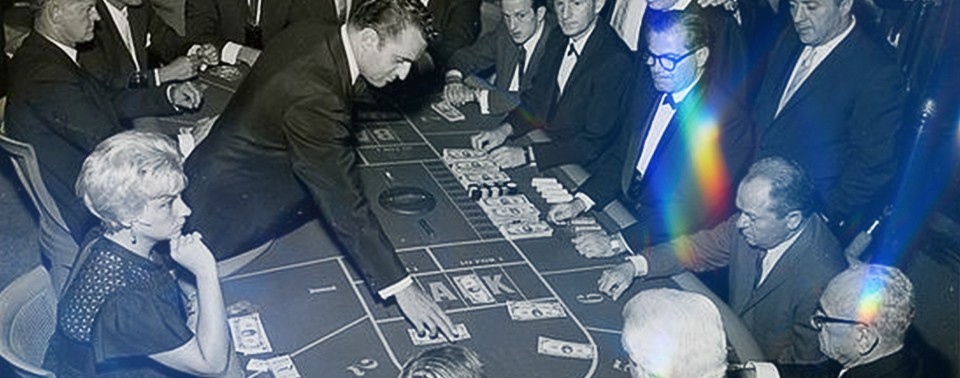
According to the first version, the game was invented in Italy by Felix Falguerein in the 15th century. Historians associate the game's name with the Italian word “baccara”, which means zero because all tens and face cards have zero points.
The game quickly became popular and spread to France. The casinos officially adopted it throughout Europe in the 17th century. There is a rumor that baccarat was the favorite game of the French King Charles VIII, following him all the aristocrats of France began to play baccarat, which directly contributed to the rapid rise of baccarat in the gaming world, which eventually made baccarat one of the main casino products.
Until the early 1900s, the original baccarat was played a little differently than today: the old version was called bank baccarat, and four different dealers dealt the cards. Each player had the opportunity to be a banker, and players could bet against other players and the house.
In the modern casino version of baccarat, there is only one dealer, bets are placed against the house (casino) and the cards are shuffled after each deal. Las Vegas – the center of the gambling world – got baccarat through South America and the Caribbean in the 1950s. During this time Las Vegas became a center of the gambling community, and one of the casino owners (Sands Casino), Tommy Renzoni, introduces the game and positioned it as a luxury game for the elite (modern aristocracy), setting high minimum stakes, while creating an atmosphere of luxury and wealth in the gaming room. His efforts paid off big and casino revenues skyrocketed in the 1960s. Other casinos followed him shortly, and baccarat eventually spread across the globe.
Asian theory

Baccarat is very popular in Asia, the second largest center of the gambling business - Macau - is allocated for baccarat 80-90% of the tables of all casinos. According to Asian theory, the roots of baccarat come from the Chinese game of Pai Gow, which requires dice. The main connection between Pai Gow and baccarat is that both require players to get 9 points total. However, this theory has not been confirmed by historians.
Baccarat Rules
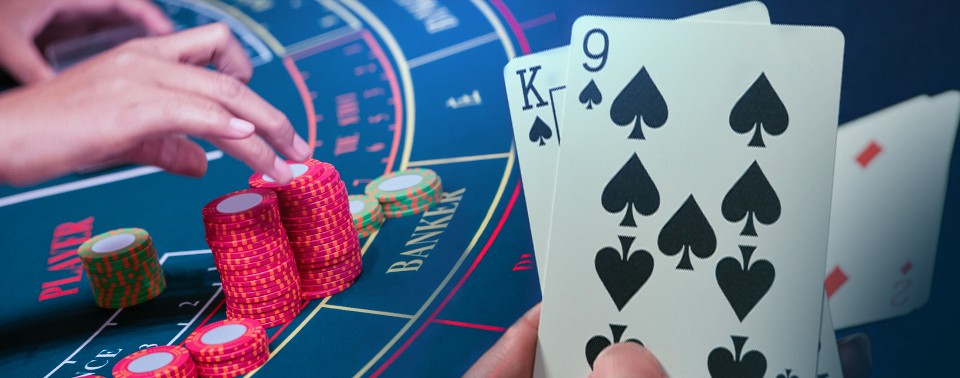
The game is pretty simple, the player has to score 9 points. The player plays against the dealer (casino). The house deals 2 cards every game, and the third can be dealt at the player’s request. Tens, Jacks, Kings have zero value in baccarat. Aces are worth 1 point, and all other cards are worth 2 to 9 points. The values sum up, so to win the game you need to get the total sum of cards closer to 9. If the sum exceeds 9, you need to subtract 10. For example, cards 8 and 7 will total in 5 (15-10).
The players place bets against the dealer (casino), who also has 2 cards; if the sum of the player's cards is between 0 and 5, then he can ask for another card; if the player has 8-9 points, he automatically wins against the dealer.
In general, this is not a complex game that requires strategic calculation, like in poker. The difficulty lies in the more trivial aspects - terminology, etiquette, betting rules, order of play, etc. Baccarat is a game of chance. The only thing the player can do is ask for a third card.